Why ethics is not a plugin - and automation is not a synonym for AI
💻 From the CIO Office

It all started with an invitation to give a talk. Harald Oechsner from WCA eCommerce Solutions asked me if I wanted to talk about eCommerce and AI. I agreed, but instead of the usual buzzword slides, I decided on something different: an honest, to-the-point AI update that would show what we should be on fire for - and where we'd better have a fire extinguisher ready. And it worked.
By sharing your knowledge, you created moments of learning and inspiration that left a lasting impression on everyone in the room. The clarity, depth, and passion you brought made a real difference.“ - Harald Ochsner - Director WCA eCommerce Network
I was touched by this feedback. It shows: When we not only explain technology, but make it tangible, something valuable is created - an impulse that lasts.
Why “Innovation Cuvée”?
Because I believe that the best ideas need to mature like good wine - but can also be fresh and bold like good beats. As a CIO and tech enthusiast, I move between two worlds: that of the technical mind and that of the human moment. It's time to bring the two together - with clarity, depth, passion and a twinkle in my eye. I'm glad you're here. Stay curious - and critical. Because we don't need blind believers in technology. We need people who know what we should be using AI for.
🚀 Innovation Radar
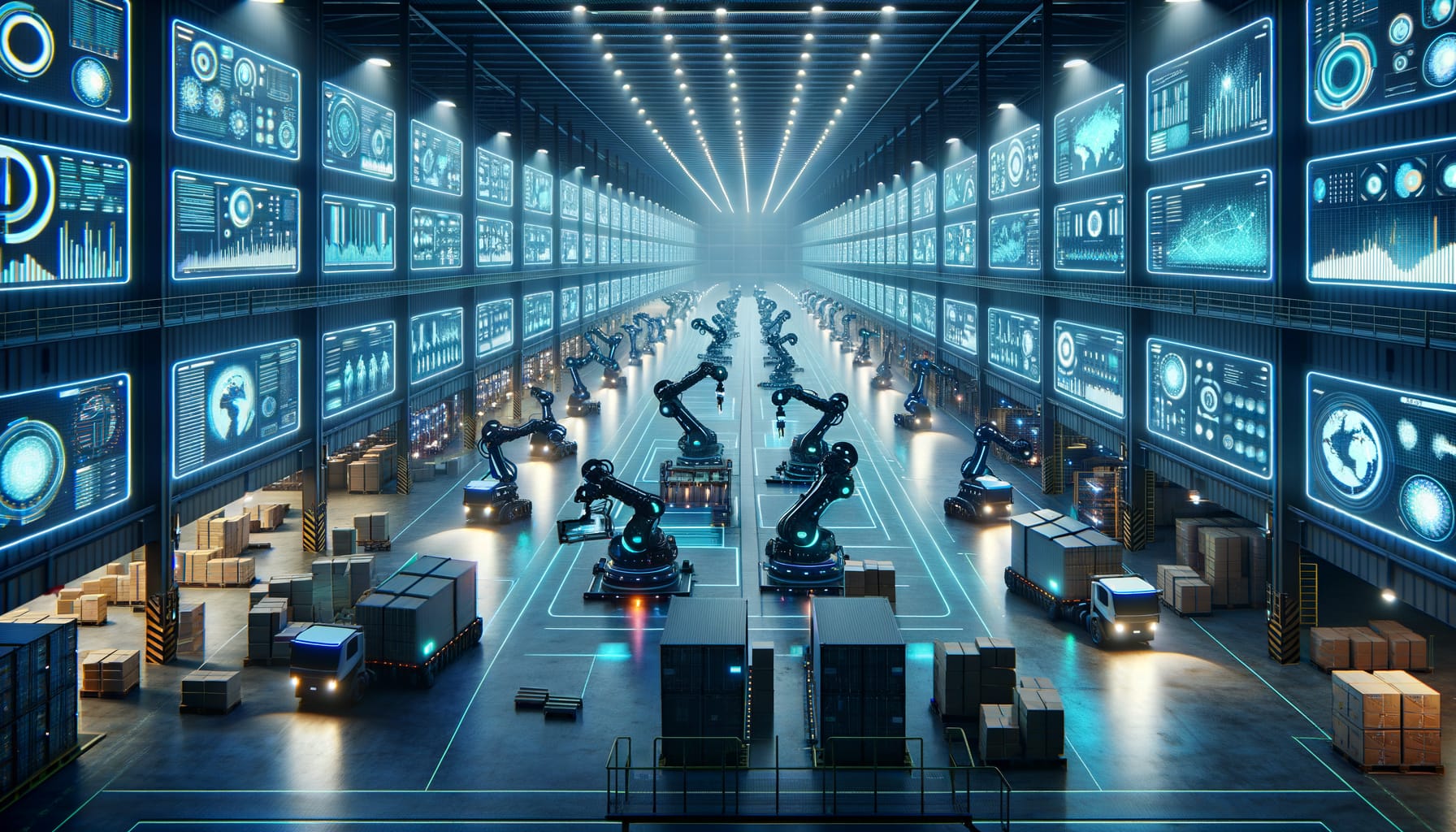
Generative AI in logistics und supply chain
An Amazon logistics centre in Antwerp shows just how much modern technology is shaping goods distribution centres today. Generative AI is now regarded as a key technology for more efficient supply chains. A recent study by Accenture predicts that around 29% of working hours in supply chain processes could be automated by AI and a further 14% could be supported by AI - totalling around 58% of all process steps. - Source
This automation promises considerable productivity and cost benefits, but requires precise data and process management. If AI is trained and operated with incomplete, inaccurate or distorted data, the benefits will be limited.
There is also potential in road freight transport: in a pilot project with Iveco, the US start-up Plus and partners such as DSV and dm-drogerie markt, the first semi-autonomous truck was tested on public roads in Germany. The AI-supported assistance system (with lidar, radar and cameras) demonstrated stable driving behaviour during lane changes and adaptive driving under real-life conditions. According to the project, fuel consumption was reduced by around 10%. - Source
Such autopilot systems could not only increase efficiency in the future, but also improve road safety by taking the strain off drivers on monotonous journeys. However, traditional training for truck drivers can also have a similar effect.
🪞 Black Mirror Corner
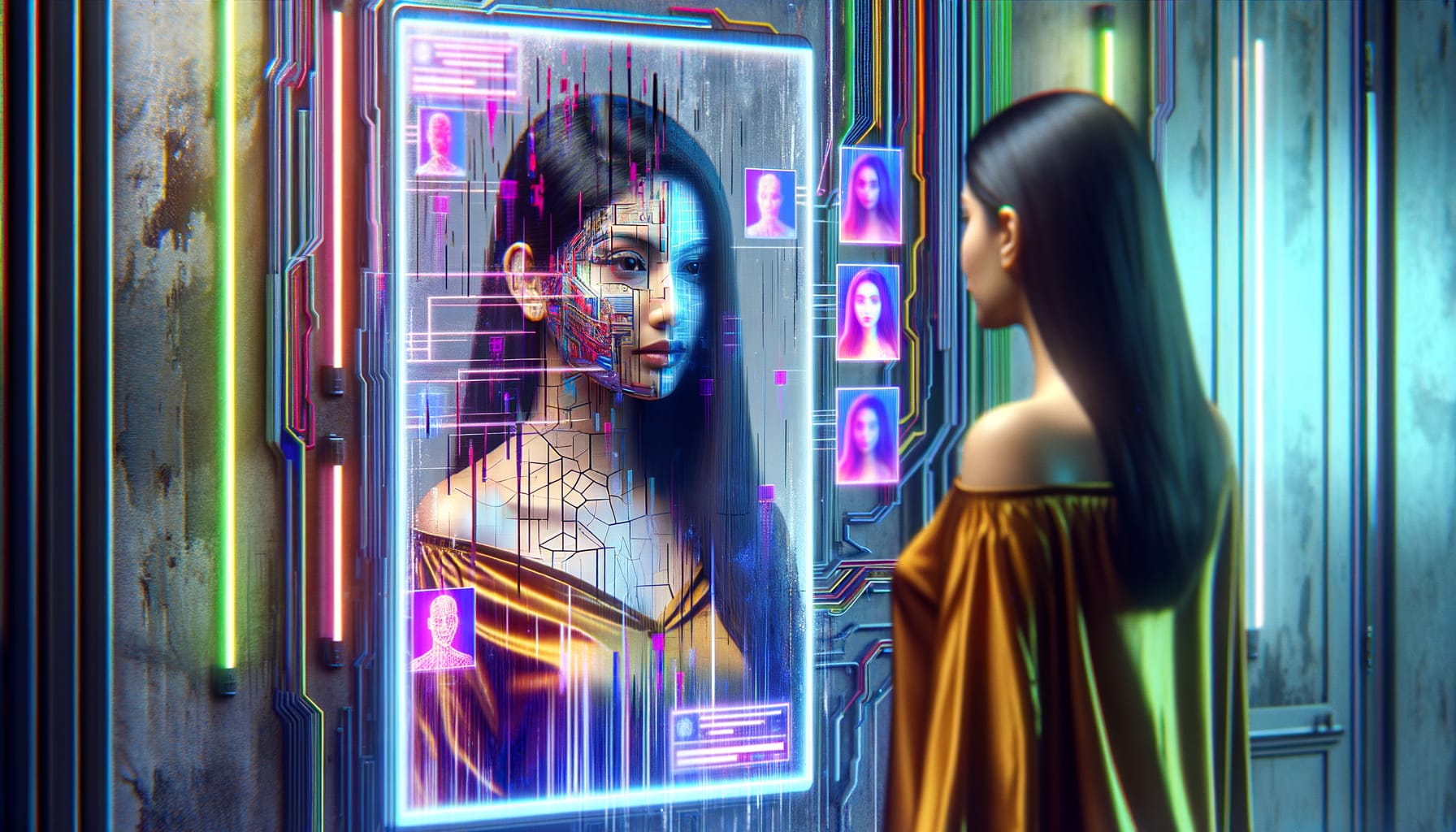
🎯 "Am I beautiful, ChatGPT?" - When machines start evaluating us
Imagine a young woman asking ChatGPT: "Am I pretty?" Not an influencer, not a model, but simply a person looking at herself in the mirror - and looking for an answer in the digital space. What used to be answered by a friend, a partner or a questioning look in the mirror is now increasingly being answered by AI models.
More and more users - especially young people, often women - are turning to AI systems to make judgements about their attractiveness.
Why? Because they feel judged by people. Because they are tired of superficial compliments and toxic comments on social media. Because machines - supposedly - respond more objectively, honestly and fairly. But this is precisely where the danger lies. Because these machines don't know the truth. Only probabilities. And these are based on their training data - in other words, on content from the internet: Fashion platforms, adverts, influencer feeds. The resulting image of beauty is distorted. Filtered faces, retouched bodies, standardised aesthetics. So when someone asks: "Am I beautiful?", the model's answer is not hurtful - but manipulative: subtly in the direction of "less belly", "clearer skin", "more symmetrical features".
The result? Subtle but powerful recommendations: less belly through surgery, more perfection, perhaps Botox. That's not bad advice. That's algorithmic damage.
📉 Amplification factor instead of mirror image
This phenomenon is not an isolated case. It is a systemic problem. There are numerous other classic examples that illustrate how biases in the training data lead to biases in the output. If you ask a generative model to draw a "productive person", you will most likely get a white man in an office. Ask the generative model to draw a "Latina woman" - and you risk getting oversexualised, adult images.
Why? Because the internet - the fabric from which AI weaves its ideas - is full of stereotypes. The models don't invent them. They reinforce them. Statistically. Reproducible. Dangerous.
🧭 What does this mean for us as IT managers?
As CIOs and technology decision-makers, we are at the interface between innovation and responsibility. We should not be blinded by the capabilities of these systems - we have to ask questions:
- What data does it contain?
- Whose reality is being mirrored here - and whose is being suppressed?
- Who suffers when we ask the wrong questions to "neutral" machines?
Because one thing is clear: ethics is not a plugin. It doesn't start with the prompt - but with the decision as to whether we should unleash a system on a problem at all. Perhaps this is one of the most important insights from the current state of generative AI: not everything that can answer should be asked. And not everything that answers is truth.
Some mirrors distort. Even the digital ones.
🧩 Simply explained - tech for everyone
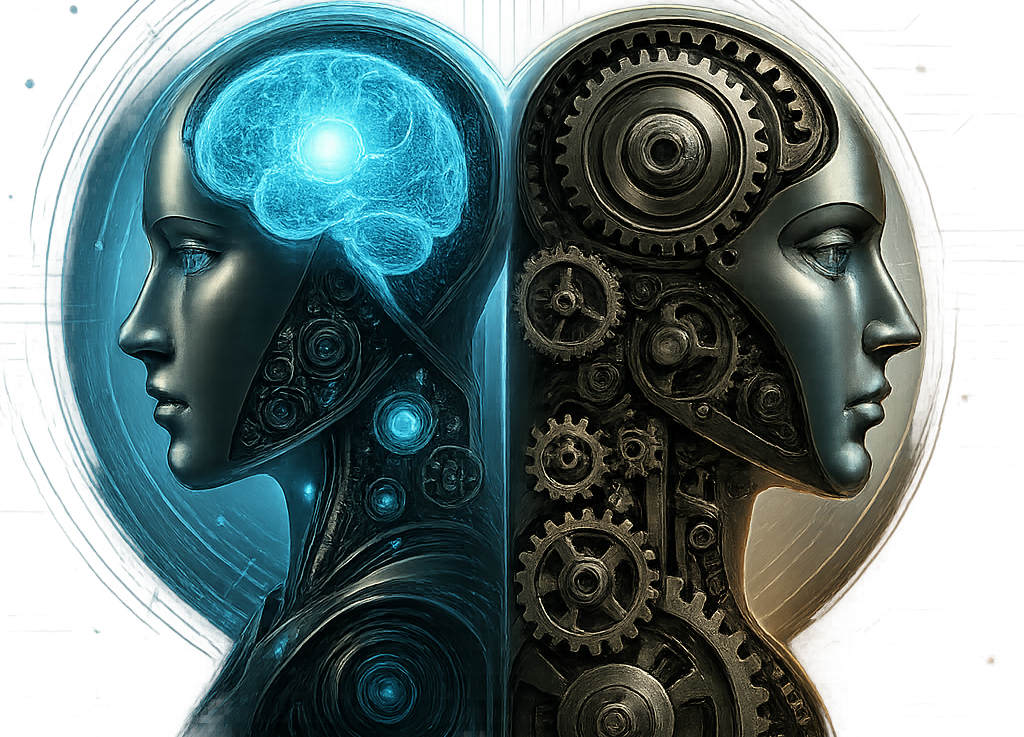
What is the difference between AI and automation?
You often hear this in meetings, in product presentations or from IT service providers: "AI will do it for you." But does the use of AI really make sense? Or is it simply a matter of automation? But what's the difference?
In one sentence:
Automation follows rules while AI tries to recognise patterns.
⚙️ Automation: The disciplined assistant
Think of automation as a very precise, reliable colleague who does exactly what you have written down for him:
- A parcel arrives.
- The software checks the weight, the address and automatically creates the customs declaration - exactly according to predefined rules.
- Every decision is comprehensible. Every action is recorded.
Automation is rule-based, auditable and very good for processes where there is a clear "right" and "wrong".
🧠 Artificial intelligence: the speculative guide
AI, on the other hand, is like a consultant who, based on millions of examples, says: "In similar cases, this was probably the right solution.":
- The AI receives a product description and suggests: "This is probably HS code 61179000"
- But why exactly? She can't explain that.
- And if it's wrong, you won't realise it until the customs inspection - with bad luck including a penalty.
AI works probabilistically - it guesses on the basis of probabilities, not certainties.
🚛 What does this mean for logistics and customs?
Especially when it comes to customs, processes must be precise and legally compliant. An incorrect HS code is not a blemish - it is an offence. That's why you should rely on the following:
- Automation of processes where legal security is crucial,
- and AI where we want to learn, analyse or collect suggestions (e.g. for product categorisation or forecasting).
Conclusion: AI is exciting - but it is no substitute for clear rules where these are necessary. When in doubt, automate where safety counts. AI where creativity is required.
🍷 Moments of Taste & Thought
 🎶 Shindy returns to the stage
I immediately bought tickets for my son and myself. Shindy is one of the most influential rap artists in Germany. Why am I putting this in here? Because Shindy is more than just Patek rhymes. With his new album, he brings back something that many formats lack: Authenticity. Attitude. Timing. His beats are polished, his lyrics seem more reflective than ever before - somewhere between melancholy, self-criticism and thoughtfulness. He addresses responsibility, pressure and style at the same time - topics that are surprisingly close to the world of a CIO.
Click here for the new song: SHINDY - PROTOTYP (FEAT. MASSIV).

🍷The past in bottles
Two weeks ago, I bought myself a very special bottle: Château Rouget 1955 - the year my father was born. A bottle with history, patina and depth - not a collector's item for the wine cellar, but a promise of a beautiful moment that I will share with my father. Just as technology builds bridges between systems, good bottles build bridges between generations. And that is sometimes the most valuable kind of connection.

🥂 Champagne, sun & pool
On Sunday, the opposite of strategy meetings: sun, pool, family, friends - and a spontaneous champagne tasting with bottles from the 80s. Including a surprise with a fabulous peach aftertaste and amazing freshness. Some decisions are made out of reason - others with a wink in the sunlight.
Those who take pleasure seriously are better able to take responsibility.
📅 Outlook & dates
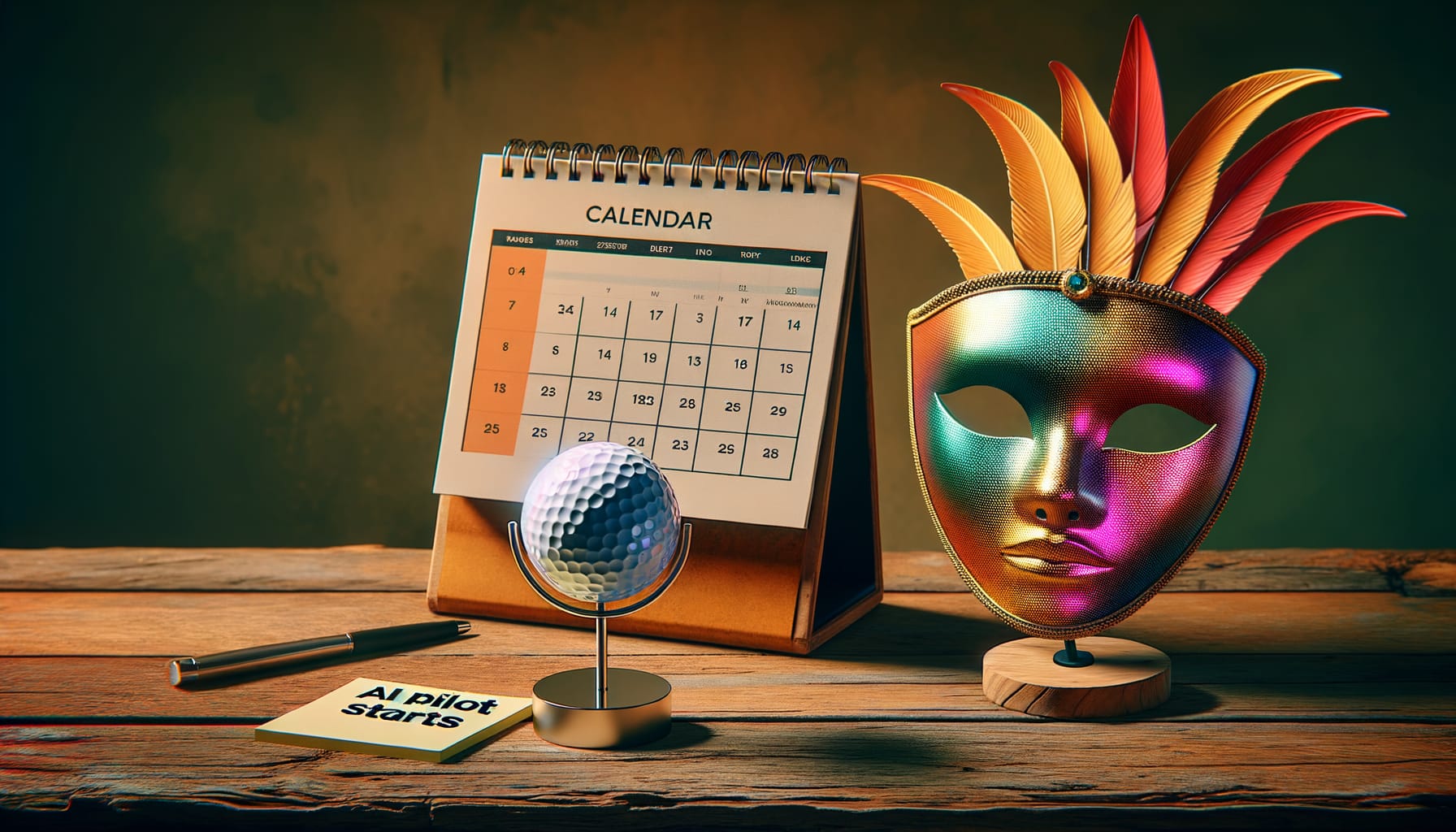
After the carnival is before the carnival - on 5 July I'll be playing in the Großen Braunsfelder Karnevalscup. Carnival meets golf is a Cologne combination of etiquette, Et Kölsch and a bit of ambition with the driver. Anyone who sees me on the green: I'm the one with the digital scoreboard. Apart from that, July is a deliberately event-free month - a good time to roll up our sleeves: we are working internally on the first AI pilot. It will be exciting, practical and visionary.
In the next newsletter, I'll be looking at a question that I can't get out of my head:
👉 How will we know in future whether people are sitting in a team meeting - or just well-trained AI models with avatars and microphones?
Until then, I look forward to your feedback. What did you like? What can I do better next time?
📩 Write to me directly or comment on LinkedIn - I read every message.
Finally, a quote that fits quite well at this time:
„Technology is best when it brings people together.“ - Matt Mullenweg (Founder of WordPress)
Thanks for reading - and see you soon. Nico | CIO | MBS Group | AI enthusiast with taste